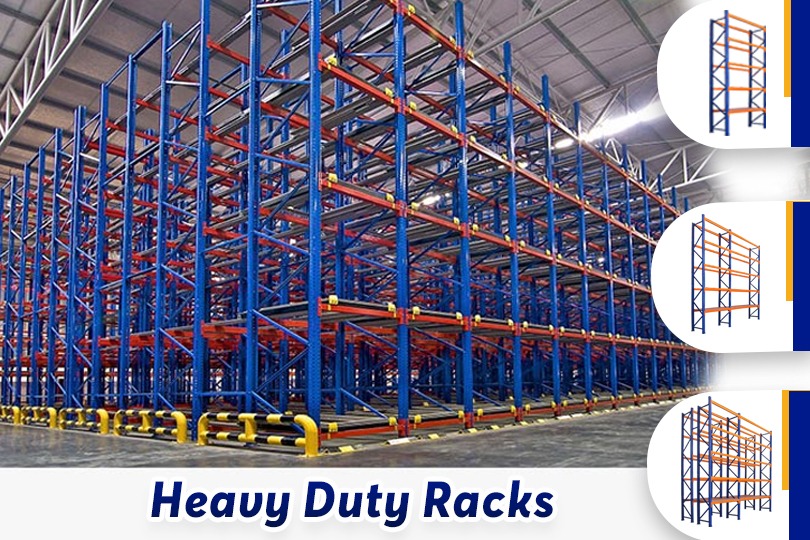
A heavy duty rack is an essential storage system designed to handle high-load inventory in warehouses, factories, supermarkets, logistics centers, and industrial environments. The heavy duty rack is engineered with strong steel structures to support heavy goods while maximizing storage efficiency and safety.
In modern supply chain operations, heavy duty racking systems are critical for optimizing warehouse space, improving inventory management, and ensuring operational safety.
Table of Contents
- What is a Heavy Duty Rack
- Importance of Heavy Duty Racking Systems
- Types of Heavy Duty Racks
- Load Capacity and Structural Strength
- Benefits of Heavy Duty Industrial Racks
- How to Choose the Right Heavy Duty Rack
- Industries That Use Heavy Duty Racks
- Installation and Safety Considerations
- Heavy Duty Rack Trends in 2026
- FAQs
- Conclusion
What is a Heavy Duty Rack?
A heavy duty rack is an industrial-grade shelving system designed to store large, bulky, or high-weight goods safely and efficiently. These racks are typically made from high-strength steel and engineered to withstand substantial loads without deformation.
They are widely used in:
- Warehouses
- Distribution centers
- Manufacturing units
- Retail storage facilities
- Cold storage environments
Importance of Heavy Duty Racking Systems
Heavy duty racks play a critical role in modern logistics and storage operations.
Maximizing Warehouse Space
They allow vertical storage utilization, enabling businesses to store more inventory without expanding physical space.
Improving Inventory Organization
Proper racking systems help categorize goods efficiently, improving picking speed and stock control.
Enhancing Workplace Safety
Strong and stable structures reduce risks of collapse, damage, and workplace accidents.
Types of Heavy Duty Racks
Different storage environments require different racking configurations.
Pallet Racking System
The most common type used in warehouses for palletized goods. Supports forklifts and high-density storage.
Long Span Shelving Rack
Designed for medium to heavy loads that are not palletized, ideal for manual handling.
Cantilever Heavy Duty Rack
Used for long and bulky items such as pipes, timber, and steel bars.
Drive-In Rack System
High-density storage solution allowing forklifts to enter rack lanes.
Selective Pallet Rack
Provides direct access to each pallet, improving flexibility and inventory rotation.
Load Capacity and Structural Strength
One of the defining features of a heavy duty rack system is its load-bearing capability.
Typical load ranges include:
- Light heavy duty: 200–500 kg per level
- Medium heavy duty: 500–1000 kg per level
- Industrial heavy duty: 1000–3000+ kg per level
Load capacity depends on:
- Steel thickness
- Beam design
- Frame structure
- Anchoring system
Benefits of Heavy Duty Industrial Racks
Investing in heavy duty racking provides long-term operational advantages.
High Storage Efficiency
Maximizes vertical and horizontal warehouse space utilization.
Improved Operational Flow
Speeds up picking, packing, and inventory management.
Durability and Longevity
Built from industrial-grade steel for long-term use.
Scalability
Systems can be expanded or reconfigured as storage needs grow.
Cost Efficiency
Reduces the need for additional warehouse space.
How to Choose the Right Heavy Duty Rack
Selecting the right system depends on operational needs and storage type.
Load Requirements
Understand the weight of goods to determine rack strength.
Storage Type
- Palletized goods → Pallet racks
- Long items → Cantilever racks
- Mixed storage → Long span shelving
Warehouse Layout
Consider aisle width, forklift movement, and ceiling height.
Material Quality
Look for powder-coated, corrosion-resistant steel construction.
Supplier Expertise
A reliable supplier ensures proper design, installation, and safety compliance.
Industries That Use Heavy Duty Racks
Heavy duty racks are widely used across multiple industries:
- Logistics and warehousing
- Manufacturing plants
- Automotive industry
- Retail distribution centers
- E-commerce fulfillment centers
- Cold storage and food supply chains
- Construction material storage
Installation and Safety Considerations
Proper installation is critical for performance and safety.
Floor Anchoring
Racks must be securely bolted to concrete floors.
Load Distribution
Even weight distribution prevents structural imbalance.
Regular Inspection
Routine checks ensure structural integrity over time.
Safety Accessories
- Beam locks
- Column protectors
- Safety nets
- Load signage
Heavy Duty Rack Trends in 2026
Modern storage systems are evolving rapidly.
Smart Warehouse Integration
Racks integrated with warehouse management systems.
Modular Rack Systems
Flexible designs for easy expansion and reconfiguration.
High-Density Storage Solutions
Optimized systems for maximum space utilization.
Sustainable Industrial Design
Eco-friendly steel production and recyclable materials.
Frequently Asked Questions
What is a heavy duty rack used for?
It is used for storing heavy goods in warehouses, factories, and industrial storage environments.
How much weight can a heavy duty rack hold?
Depending on design, it can support from 200 kg up to 3000+ kg per level.
What is the difference between light and heavy duty racks?
Heavy duty racks are designed for industrial loads, while light racks are for small or medium-weight storage.
Are heavy duty racks customizable?
Yes, they can be customized in height, width, load capacity, and configuration.
Which industries use heavy duty racks most?
Warehousing, logistics, manufacturing, retail distribution, and automotive industries.
Conclusion
A heavy duty rack system is a critical investment for any business dealing with large-scale storage and logistics. It improves efficiency, enhances safety, and maximizes warehouse space utilization.
Choosing the right industrial racking system ensures long-term operational performance and scalability, making it an essential component of modern supply chain infrastructure in 2026.

