Cyber threats aren’t slowing down — and neither is the pressure on businesses to keep their cloud infrastructure secure. In 2026, the combination of remote work, AI-driven attacks, and increasingly complex multi-cloud environments means that “just install an antivirus” is no longer enough.
The good news? There’s a new generation of SaaS tools built specifically to tackle these problems — without requiring a massive IT department or enterprise-level budget. Here’s a look at six platforms worth knowing about right now.
1. Pingify — Know When Something Goes Wrong Before Your Customers Do
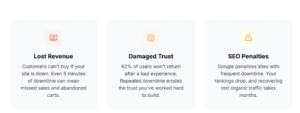
You can’t fix what you don’t know is broken. Pingify monitors your website around the clock — checking uptime, SSL certificate status, DNS configuration, keywords on your pages, and scheduled cron jobs. The moment something slips, you get an alert.
What makes it stand out in 2026 is how much ground it covers in one lightweight tool. SSL expiry alone has caused embarrassing outages for companies that simply forgot to renew a certificate. Pingify takes that off your mental checklist entirely. For small and mid-sized businesses that don’t have a dedicated ops team watching dashboards 24/7, this kind of passive vigilance is genuinely valuable.
2. IG CloudOps — Managed Cloud Without the Guesswork
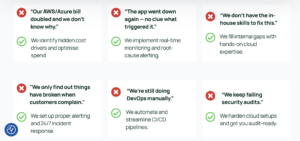
Moving to the cloud is one thing. Keeping it optimized, cost-efficient, and secure is another. IG CloudOps offers fixed-price managed services across AWS, Azure, and Google Cloud Platform — which means no surprise invoices at the end of the month.
As certified partners of all three major cloud providers, their team handles the day-to-day operational burden: cost control, uptime, DevOps support, and security configurations. For growing businesses that want cloud expertise without hiring a full internal team, this is the kind of partner that removes a lot of risk from the equation. In 2026, when cloud misconfigurations remain one of the top causes of data breaches, having experienced eyes on your infrastructure matters.
3. The Security Bulldog — AI-Powered Vulnerability Remediation
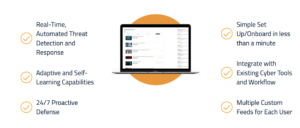
Enterprise cybersecurity teams spend an enormous amount of time manually triaging vulnerabilities — deciding which ones are actually dangerous, which ones can wait, and how to fix them efficiently. The Security Bulldog cuts through that noise with an AI-powered intelligence platform originally built for the intelligence community.
The platform is designed to lower both the cost and the time required to remediate vulnerabilities. That’s a significant promise, but it addresses a real problem: most security teams are overwhelmed, not under-resourced. The focus on speed and prioritization — rather than just threat detection — puts it in a category of its own. If your team spends more time in spreadsheets than actually fixing things, this is worth a look.
4. Secnap — Enterprise-Grade Security for Businesses of Every Size
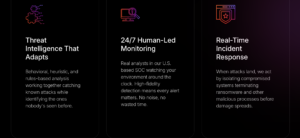
Managed detection and response used to be something only large enterprises could afford. Secnap (represented by Gosling Media) changes that equation with its CloudJacket platform, which brings 24/7 expert monitoring, AI-powered threat detection, dark web monitoring, and compliance management to organizations that don’t have a full security operations center.
Their offering also includes vulnerability assessments, web application security, and security awareness training — which means they cover both the technical and human sides of the security equation. Given how frequently social engineering attacks succeed simply because employees aren’t trained to recognize them, that last piece is easy to overlook but genuinely important.
5. Censinet — Risk Management Built for Healthcare
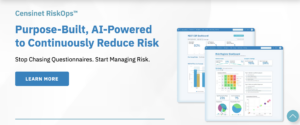
Healthcare organizations face a unique cybersecurity challenge: massive amounts of sensitive patient data, a sprawling network of third-party vendors, and regulatory requirements that don’t forgive mistakes. Censinet is the only risk management platform purpose-built specifically for this environment.
Their flagship product, Censinet RiskOps, connects healthcare delivery organizations with a risk network covering more than 40,000 vendors and products. Instead of manually assessing each vendor through slow, paper-based questionnaires, health systems can instantly access existing assessments and continuously monitor their vendor ecosystem. In an industry where a single compromised third-party vendor can cause a system-wide crisis, this level of visibility is no longer optional — it’s essential.
6. Captchify — Test Your Way to a More Secure, Higher-Converting Website
This one might surprise you on a cybersecurity list — but website optimization and security are more connected than they seem. Captchify is an A/B testing platform designed for startups and SMBs, offering real-time analytics, audience segmentation, and multi-variant testing at a fraction of the cost of enterprise tools.
Where does security fit in? Testing different authentication flows, login UX, and onboarding paths helps businesses understand exactly how users interact with sensitive parts of their product. Poor UX on login pages often pushes users toward insecure workarounds. And with Captchify’s precise audience segmentation, you can test security-related changes (like multi-factor authentication prompts) with specific user groups before rolling them out broadly. Smarter experiments lead to better decisions — and better decisions lead to safer products.
The Bottom Line
In 2026, cybersecurity and cloud infrastructure aren’t sepaRemove Imagerate conversations anymore — they’re the same conversation. Whether you’re a startup watching your first cloud bill or an enterprise managing thousands of vendor relationships, the tools above cover a realistic range of what most businesses actually need to think about.
You don’t have to implement everything at once. But picking one area where you’re currently flying blind — uptime, vendor risk, vulnerability backlog, cloud costs — and solving it properly is a solid first step.